

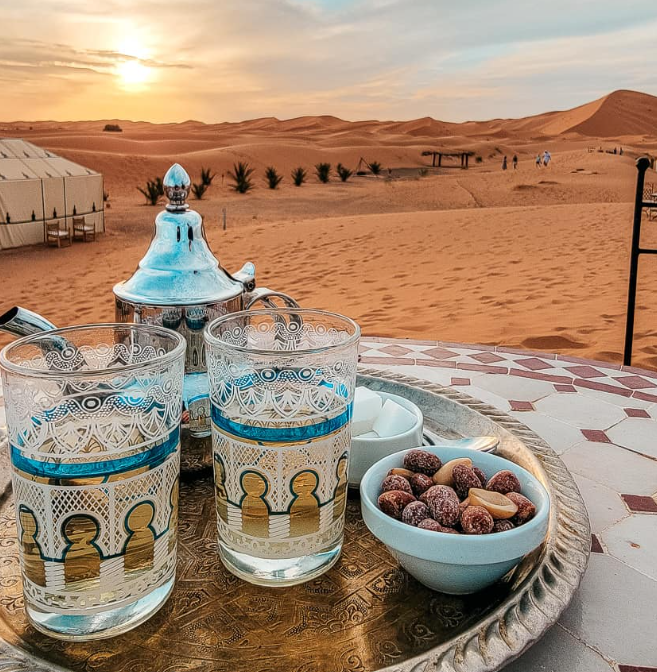
In the Sahara, food is more than nourishment—it is comfort, tradition, and connection. Desert cuisine in Merzouga reflects centuries of adaptation to the land, blending rich flavors, slow cooking, and generous hospitality. Enjoyed beneath open skies and surrounded by dunes, each meal becomes an essential part of the desert experience.
For travelers staying in luxury desert camps, dining in the Sahara is often one of the most memorable highlights of the journey.
The Roots of Moroccan Desert Cuisine
Moroccan desert cuisine has been shaped by nomadic life and limited resources, resulting in dishes that are both simple and deeply flavorful. Slow-cooked meals preserve moisture, spices add warmth and depth, and ingredients are chosen for their ability to sustain travelers in a harsh environment.
Staples of desert cuisine include:
- Tagines cooked slowly over low heat
- Couscous prepared for shared meals
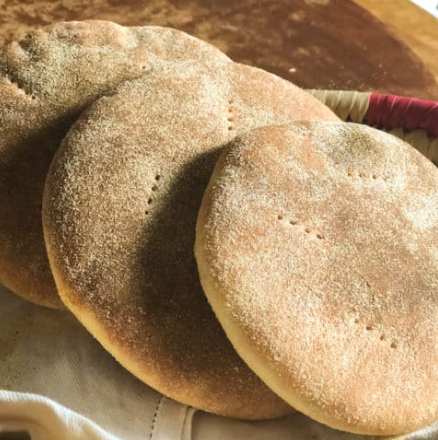
- Fresh bread baked daily
- Olive oil, dates, and seasonal vegetables
These traditions remain at the heart of desert dining today.
Dining in a Luxury Desert Camp
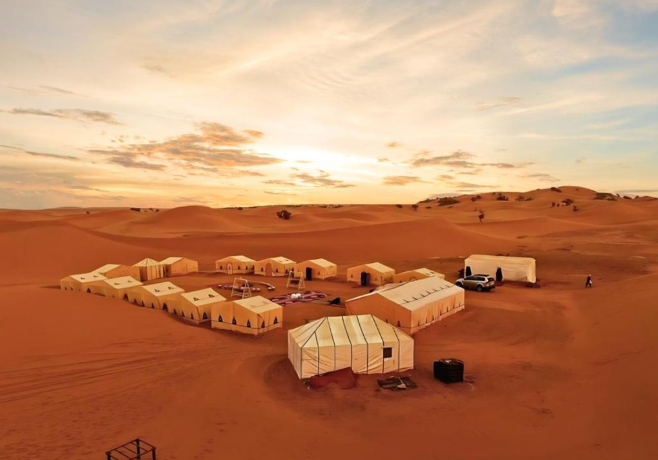
Luxury desert camps in Merzouga elevate traditional recipes without losing their authenticity. Meals are prepared by skilled cooks who respect Moroccan culinary heritage while presenting dishes with elegance and care.
Dining often takes place:
- Inside beautifully designed dining tents
- Outdoors under the stars
- By candlelight with panoramic dune views
The setting transforms each meal into an experience that engages all the senses.

Signature Dishes of the Sahara
While menus vary, certain dishes are closely associated with desert hospitality in Merzouga. These meals are prepared using fresh ingredients and traditional techniques passed down through generations.
Common dishes include:
- Chicken or lamb tagine with spices and vegetables
- Beef or vegetable couscous
- Grilled meats prepared over open fire
- Seasonal salads and soups
Each dish reflects a balance of flavor, warmth, and nourishment suited to desert life.

Moroccan Tea: A Symbol of Hospitality
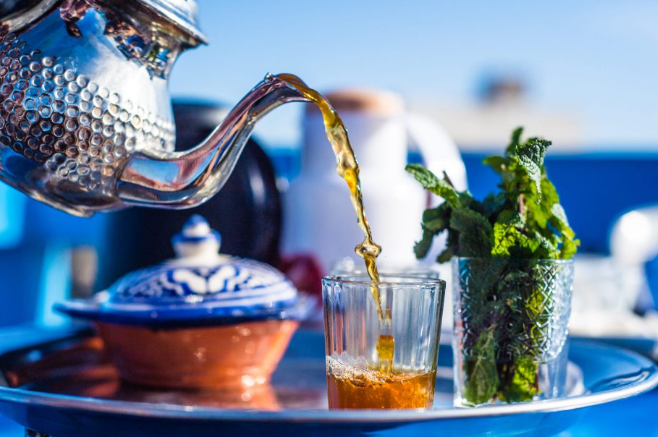
No desert meal is complete without Moroccan mint tea. Served throughout the day, tea is a symbol of welcome, respect, and social connection.
Prepared with green tea, fresh mint, and sugar, it is poured from a height to create foam—an art form in itself. Sharing tea in the desert, especially at sunset or under the stars, creates moments of calm and conversation that define Saharan hospitality.
Food as a Shared Cultural Experience
In the Sahara, meals are meant to be shared. Dining brings people together, encouraging conversation, storytelling, and connection. For travelers, this creates an opportunity to engage with local culture in an intimate and meaningful way.
Whether dining with fellow guests or guided by local hosts, desert cuisine becomes a bridge between cultures—one that is remembered long after the journey ends.
Why Desert Dining Is So Memorable
The flavors of Moroccan cuisine, combined with the silence of the dunes and the beauty of the night sky, create a dining experience unlike any other. In Merzouga, food is inseparable from place—it tastes richer, feels warmer, and lingers longer in memory.
Desert cuisine is not just eaten; it is experienced.
Final Thoughts: Taste the Sahara
Dining in the Sahara offers a deeper understanding of Moroccan culture and desert life. From traditional recipes to refined camp dining, every meal tells a story shaped by land, history, and hospitality.
For travelers visiting Merzouga, discovering desert cuisine is an essential part of experiencing the Sahara in its fullest form.